
The Digital Pat on the Back: Why the “Great Job GIF” is Revolutionizing Workplace Praise
In the modern era of remote work, hybrid schedules, and asynchronous communication, the way we celebrate success has fundamentally shifted. Gone are the days when a simple pat on the back or a round of applause in the boardroom were the only ways to show appreciation. Today, our applause comes in the form of looping pixels, witty captions, and pop-culture references.
At the center of this digital recognition revolution is the ubiquitous “great job gif.” But how did we get here, and what do the different flavors of digital praise say about our workplace culture? Let’s dive into the fascinating world of digital kudos.
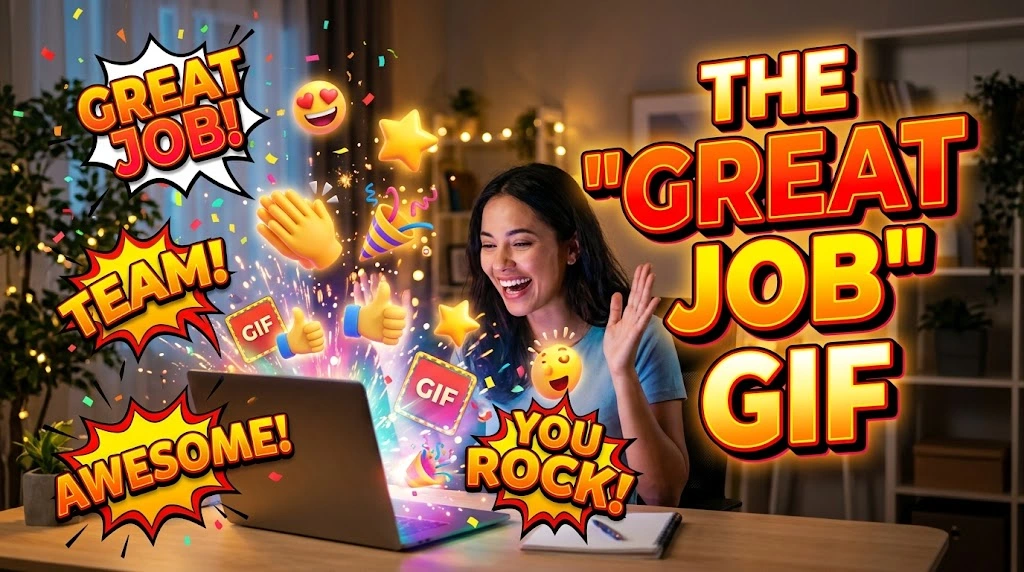
The Rise of the “Great Job GIF”
Text on a screen can often feel devoid of emotion. Typing “good job” in a Slack or Microsoft Teams channel conveys the message, but it completely lacks the warmth of human enthusiasm. Enter the great job gif.
Whether it’s Leonardo DiCaprio raising a glass in The Great Gatsby, a standing ovation from an award show, or an aggressively supportive cartoon character, a GIF injects instant emotion, tone, and personality into your praise. It bridges the digital divide, allowing colleagues to express genuine excitement that plain text simply cannot capture.
The Foundation: A Simple “Good Job”
Before we can appreciate the extravagant GIFs and memes, we have to acknowledge the foundation: the classic “good job.” It is the bread and butter of positive reinforcement. Regular, consistent recognition is critical for employee morale and retention. When you tell someone “good job,” you are validating their effort and signaling that their work is seen and valued. Even in a fast-paced digital environment, taking a moment to type those two words—or deliver them on a video call—remains one of the most powerful tools a manager or peer can use.
Elevating the Praise: The “Awesome Job”
Sometimes, a project requires more than just standard approval. When a colleague pulls an all-nighter to fix a critical bug or lands a massive client against all odds, a standard “good job” feels insufficient. This is where the “awesome job” comes into play.
Saying “awesome job”—often accompanied by a GIF of mind-blown expressions or explosive celebrations—signals that the individual didn’t just meet expectations; they shattered them. Reserving “awesome” for truly exceptional work ensures that your praise retains its value and gives high achievers the specific recognition they deserve.
Celebrating the Collective: “Great Job Team”
Success in the modern workplace is rarely a solo endeavor. When a massive project crosses the finish line, the celebration must be collective. The “great job team” message is vital for fostering camaraderie and a sense of shared purpose.
In group chats, dropping a “great job team” GIF—think of a perfectly synchronized sports team celebration, a high-five chain, or a massive group hug—helps unify a distributed workforce. It reminds everyone that despite being in different time zones or home offices, they are part of a cohesive unit that wins together.
The Humor Injection: The “Good Job Meme”
While GIFs are great for dynamic emotion, the “good job meme” is the undisputed king of workplace humor. Memes rely on shared cultural context and often carry a layer of irony or exaggerated earnestness.
Sending a “Success Kid” meme or the classic “Obama awarding Obama” meme adds a layer of levity to the work day. Memes are particularly popular among peers because they strip away corporate formality. A well-timed “good job meme” says, “I see how hard you worked on this, and I appreciate it enough to share a laugh with you.”
- Why the “Great Job GIF” is Your Team’s Ultimate Secret Weapon
 The Digital Pat on the Back: Why the “Great Job GIF” is Revolutionizing Workplace Praise In the modern era of remote work, hybrid schedules,… Read more: Why the “Great Job GIF” is Your Team’s Ultimate Secret Weapon
 - PKLI Rawalpindi Jobs Pakistan Kidney and Liver Institute and Research Center Advertisement September 2026 October
 All latest Pakistan Kidney and Liver Institute and Research Center Jobs Advertisement are given below. You must read all advertisement of PKLI Rawalpindi Jobs… Read more: PKLI Rawalpindi Jobs Pakistan Kidney and Liver Institute and Research Center Advertisement September 2026 October
 - National Commission on the Status of Women Islamabad Jobs Advertisement September 2026
 In this article we will give you information all National Commission on the Status of Women Islamabad Jobs Advertisement that published in any newspaper… Read more: National Commission on the Status of Women Islamabad Jobs Advertisement September 2026
 - University of Chakwal Jobs Advertisement 2026 September
 The University of Chakwal (UoC) has officially announced 53 vacant teaching faculty positions in its September 2026 job advertisement. These appointments are available on… Read more: University of Chakwal Jobs Advertisement 2026 September
 - Liaquat National Hospital Karachi Jobs September 2026 Advertisements
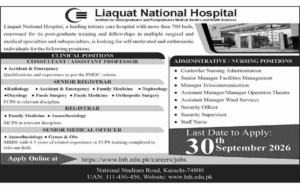 All the latest information regarding the Liaquat National Hospital Karachi Jobs Advertisements available below, please read all information carefully and apply before last date… Read more: Liaquat National Hospital Karachi Jobs September 2026 Advertisements
 - National Police Foundation Islamabad Jobs September 2026
 National Police Foundation Islamabad Jobs September 2026: The Infrastructure Development and Architecture Directorate (IDAD – PMU) under the National Police Foundation (NPF) has announced… Read more: National Police Foundation Islamabad Jobs September 2026
The Unexpected Twist: Building Morale is an “Inside Job”
When we hear the phrase “inside job,” our minds usually jump to corporate espionage, heist movies, or the hilariously cynical animated series about deep-state workplace dysfunction. But in the context of corporate culture, cultivating a positive environment is the ultimate “inside job.”
You cannot outsource genuine appreciation. External perks like free coffee or company swag are nice, but true morale is built from the inside out. It relies on internal networks of peers and managers actively choosing to uplift one another. Furthermore, fans of the show Inside Job know exactly how chaotic a workplace can be; using memes from the show to navigate the madness of corporate life and congratulate a coworker for surviving a tough week is a prime example of how internet culture makes work more bearable.
Conclusion
We have evolved far beyond the formal corporate memo. Today, expressing gratitude and celebrating wins is a vibrant, visual, and highly communicative art form. Whether you are sending a flashy “great job gif” to a peer, declaring an “awesome job” to a top performer, rallying the troops with a “great job team,” or sharing a laugh over a “good job meme,” you are participating in a vital “inside job”—the ongoing effort to make the digital workplace a little more human.

